
After sharing impressions of a rather glitzy event in London in my last article, in this blog I wish to return to the basics of using homeopathic remedies at home for common ailments.
This is a subject I come back to from time to time. Back in 2023 I wrote an article titled Family Care with Homeopathy which took inspiration from the work of the late Dr Alastair Jack, one time general practitioner in the Bromsgrove area. He retired in 1980. He made sure that his patients all had a small stock of common homeopathic remedies. This was mutually beneficial as he received fewer out-of hours-calls. Today, this would mean fewer 111 calls or trips to A&E.
In what seems now to be a simpler age, Dr Jack could write an NHS prescription for his patient’s ‘war chest’ but alas that is no longer possible, but homeopathic pharmacies have kits containing most of the remedies Dr Jack recommended. Costing between £30 and £60, they should keep for a decade and more (despite regulation expiry dates) if looked after properly .
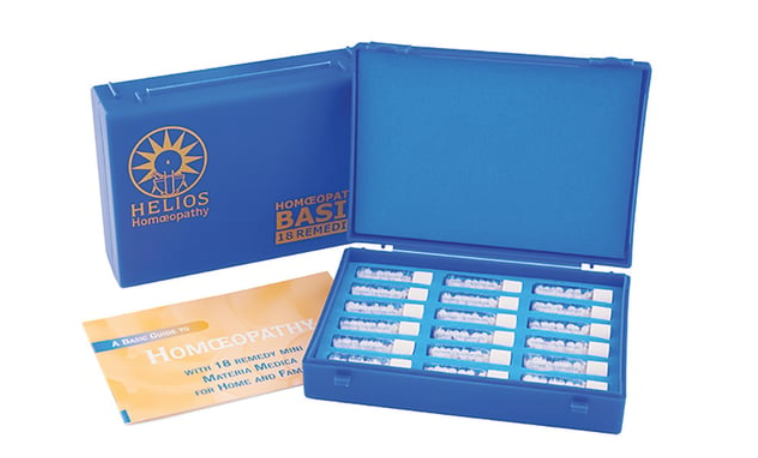
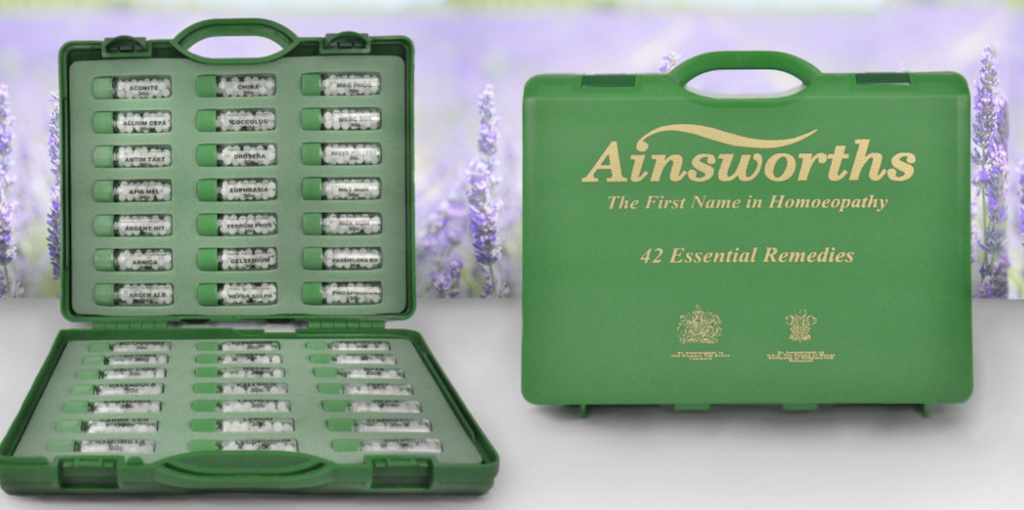
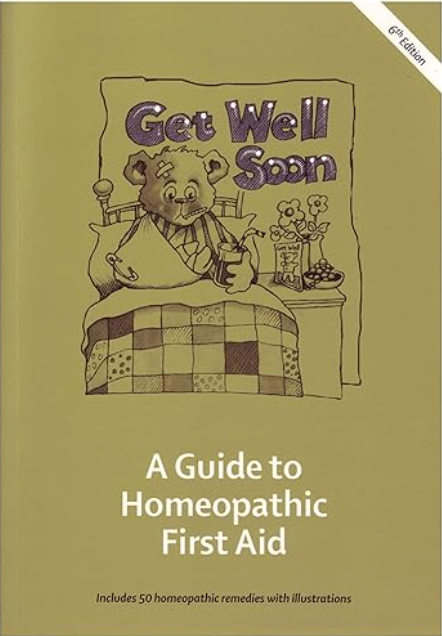
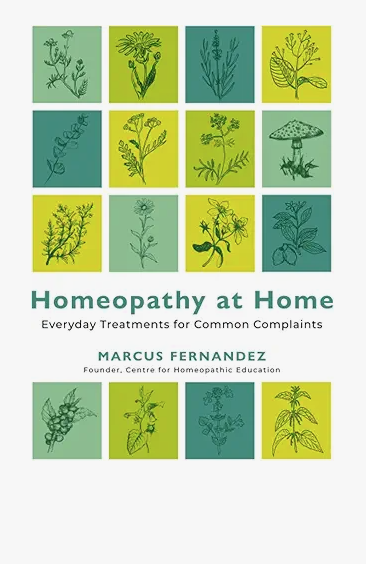
There are also some handy guides costing under £10.
Remedy selection is based on analogy. The word homeopathy means similar suffering. Every homeopathic remedy has a picture – mental/emotional; general, and physical. This picture is matched to that of the remedy – mental/emotional; general, and physical.
How, you might ask can a remedy have a picture? Well, homeopathic remedies are tested on healthy humans (not animals) through which the picture emerges (this is called a ‘proving’). Additionally, for the commonly used remedies, decades of clinical experience enhance our knowledge of these pictures.
Illness is characterised by deviation from the norm. It is fairly obvious that when we get ill or hurt ourselves, our demeanor changes. Maybe we go quiet, or irritable – that’s on the ‘mental/emotional’ plane.
The ‘physical’ is obvious – we have a cough or bruise or rash etc.
‘General’ is a little harder to explain – but it is ‘normal you’ and deviations from ‘normal you’. That could be reation to temperature or food preferences or times of the day.
The best way of thinking about a homepathic remedy is as information. Consider it as an instruction or pattern that generates a response at cellular level.
I have described the manner of manufacture before, but suffice to say that homeopathic remedies are ultra-dilutions. To think in terms of biochemical medicines – be it Aspirin, Paracetamol and more – is a mistake.
Using the analogy of information, quantity (of a single dose) is not very important. Suppose the ‘information’ in one pill is ‘heal my bruise’. Taking 20 pills (at the same time) is the same message as taking one. (So if your child decides to take a bottle full – because he likes the sugar that the pills are made from – or feed it to the goldfish – no harm will result. You cannot overdose, in the manner of taking a bottle of paracetamol – which needless to say would be an emergency).
In short, Homeopathic medicines are very safe.
However, frequency of dose is important. The body may need reminding but you don’t want to nag! So, if you or your child gets a sudden fever, you take the remedy every 5 – 15 minutes according to the severity, and then if there is some improvement go to hourly or three times a day and so on. When you are clearly on the mend – STOP. The body has got the message and will do the rest.
If the condition is less dramatic, coming on slowly – then start with two or three times a day. A cut or bruise or healing a sprain or fracture take time.
In most cases there should be no need for the remedy after 5-7 days maybe two weeks at a push if it is a slow healing issue (for example, fracture after properly set). And if there is no improvement in a few hours, then think about changing to another remedy. As Dr Jack said, you are looking for ‘the key to the lock’. If there is no change after a few doses – retake the case and try another remedy.
Please note, ‘improvement’ does NOT mean 100% better, it could be just a percentage change (less fever, more energy, less pain etc).
Ultimately, the homeopathic remedy is a stimulus to the body to cure itself. The pace of cure is set by the body.
For a baby you can crush a remedy, of better stll place the remedy in a tumbler with a few tablespoons of water and stir for a few seconds, then give a teaspoonful to the baby. The pill does not have to fully dissolve as the remedy which is absorbed onto the pill transfers to the water. You can then cover the tumbler until the next dose. Stir before each subsequent dose.
Following my analogy of information. The dose is the same be it for adult or baby (or elephant and mouse for that matter!).
The first remedies where there is fever are likely to be Aconite or Belladonna; possibly Chamomilla (teething).
Following Dr Jack’s guidance, Aconite is a good opening move. For fever, for croup, for any sudden onset of illness. The child appears frightened or may have suffered a recent shock. A close second is Belladonna. Here there is less fear but burning heat and even delirium or anger / rage. Potentially useful in earache where the above symptoms are apparent.
Note that both Aconite and Belladonna have sudden onset. However, if the onset is slow and the patient listless, consider Gelsemium. For Dr Jack, this was number one for influenza.
Pulsatilla may be considered were there is much catarrh. Where the patient is chesty think of Phosphorus.
Anytime there is sickness and diarrhoea think of Arsenicum album. One remedy to take with you on holiday should you ‘catch’ a tummy bug. The patient is likely to be chilly and restless.
This is also a remedy for respiratory distress (asthmatic) demonstating that homeopathic remedies usually have affinity beyond one bodily system.
Nux Vomica might be considered with overindulgence. And Carbo Vegetabilis where there is bloating and wind, or a state of collapse and need for air (again asthmatic).
Dr Jack suggested Bryonia for headaches and pains that are worse for any movement. In fact, ‘worse for movement’ is a keynote to prescribing this remedy.
For teething babies and toddlers it is Chamomilla that comes to the fore. The child must be carried and jogged will throw away in anger any toy handed to it. It is a temper tantrum remedy.
The classic remedy is Arnica. NOT for cuts but bruising from some blunt force. For bruises, sprains, crushed fingers etc. If there is shock then give a few doses of Aconite first.
For cuts, Calendula and Hypericum have antiseptic and nerve healing properties. They can be taken as remedies but more commonly used as a cream or as tincture (few drops added to water which is then used to bathe the wound).
The above is but an overview and the books mentioned go into more detail. Useful to have, in my opinion, especially when it can be difficult to get help quickly. There is never any harm in giving a remedy whilst you are waiting to get help. Even in ‘nil by mouth’ situations a teaspoon of remedy in water as described (see Babies) barely counts.
The potential of homeopathic medicine extends well beyond first aid. Perhaps you would care to explore whether homeopathy can help with your health? If so, please book a free 30 minute Discovery Call via this button.
I also give talks. Should you be in an organisation that would be interested a short talk (usually free) – tailored to your needs – please email me at [email protected].


Disclaimer: I am a qualified professional homeopath and not a medical doctor. The NHS has many resources, and seeking the opinion of your GP is always of value.
Dibden Purlieu, Southampton