
In this short blog I want to consider why we get sick, from the perspective of homeopathic philosopy.
Our normal state is one of harmony. Look at the rose in the picture below (from my garden as it happens). Perfection – well that is my view! You might say the same of the child at play – look at the photo in an earlier blog.
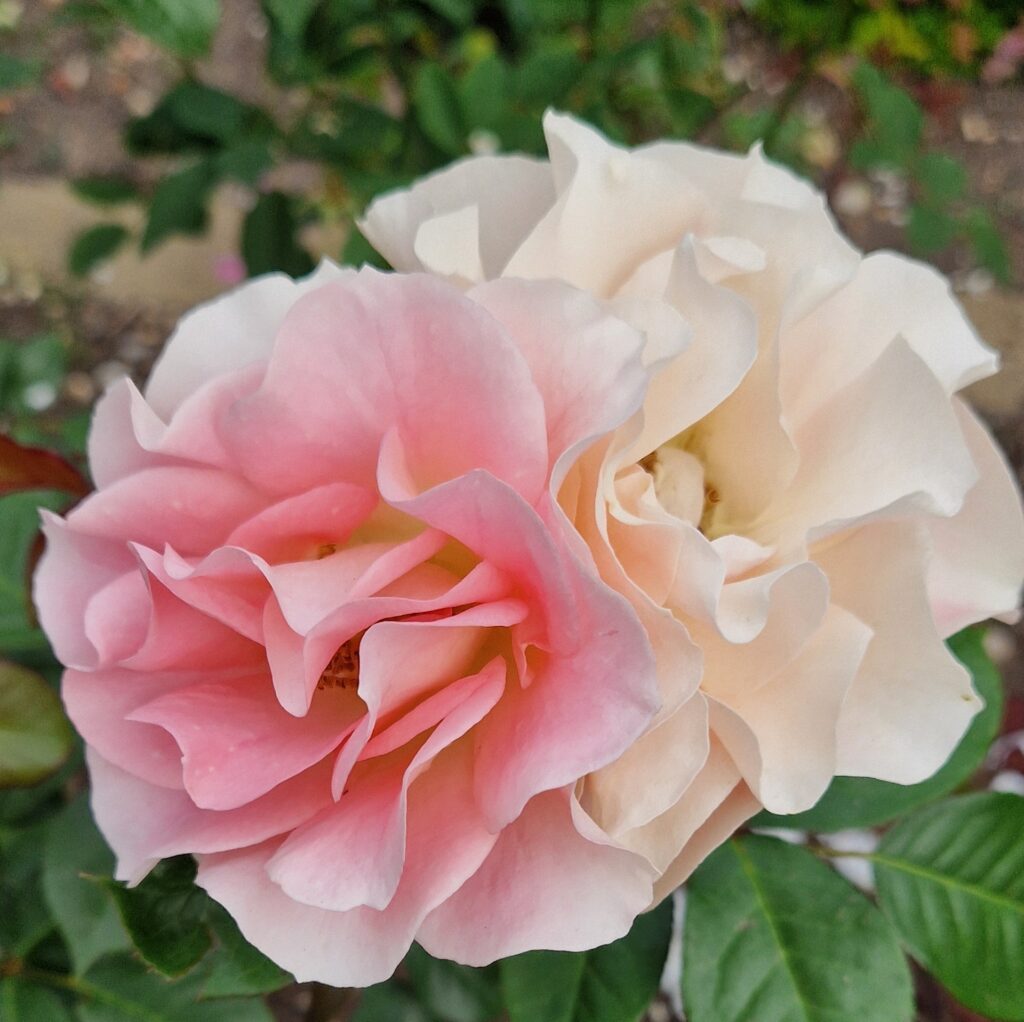
However, we all know that roses can become sick (so too children). Perhaps due to lack of water – or some other stressor. Then the pesky aphids arrive, or maybe fungal diseases from damp weather. Look around and you will see that compared to other plants, the garden roses are coping rather better that most other plants exposed to this unusually warm and dry year.
There is a key word here, and that word is ‘Susceptibility’. Different plants have different susceptibilities. I will come back to the word later.
It is a remarkable fact that when all is well, we go about our business without any aches or pains. We forget about the inner workings of our bodies.
When health goes awry, there are – from a ‘helicopter view’ – only a limited number of possible causes:
What do I mean?
In this category you can think of anything environmental. For example a bacteria or a virus. Or some other toxin be it a pollutant (say, car exhaust fumes) or an allergen (pollen). Not to mention the self-inflicted (smoking, alcohol, fast food etc!)
Like it or not we are all products of our parent and their parents reaching back ad infinitum. This is our DNA (genetics) but also the domain of epi-genetics. Here, I which introduce the concept of miasms on which topic I have written before. First in this article then a sequel.
Miasmatic theory is unique to homeopathy and a stroke of genius from the visionary Dr Samuel Hahnemann, who set down the precepts of homeopathic medicine.
Here I am thinking primarily of mental / emotional trauma. But also physical trauma in so far as it impacts on the emotions – this might be termed ‘shock’ or ‘fright’. You may suffer physical trauma in, say, a fall but likely also experience being ‘shaken-up’ by the event.
Indeed the emotional effects of the psychic disturbance may outlast the physical injury, sometimes for years.
‘Never been well since’, is an important concept in Homeopathy.
In this way ‘trauma’ can also unsettle a miasmatic inheritance, which had been quiescent up to this point in time.
Dr James Tyler Kent was a notable homeopath from Chicago in the early years of the twentieth century. His lectures on Homeopathic Philosophy are still available in print and online. He makes the remarkable observation (I paraphrase) that your pathology (physical ailments) is not your disease (or ‘dis-ease’) but its ultimate expression.
Food for thought, and potentially key to understanding a patient’s case.
I now wish to return to this important word, Susceptibility. In a way it is a fairly obvious concept, yet not much consdered in orthodox medicine – at least not at the level of the individual.
As for roses so for humans (and all living things) – we respond to different stressors in different ways. We all have different susceptibilities. Some people have allergies, others do not. Some expect respiratory infections every winter, others do not. Some get migraines, others do not and so on.
Our childhood years are important to building immunity. Playing in the mud is no bad thing; nor a little sickness.
During my stay in Calcutta (while attending Drs Banerjea study course in Classical Homeopathy), the number one rule was “don’t eat the street food” however tempting! Needless to say, our immune systems take time to acclimatise. In other words we are more susceptible to food poisoning than the locals.
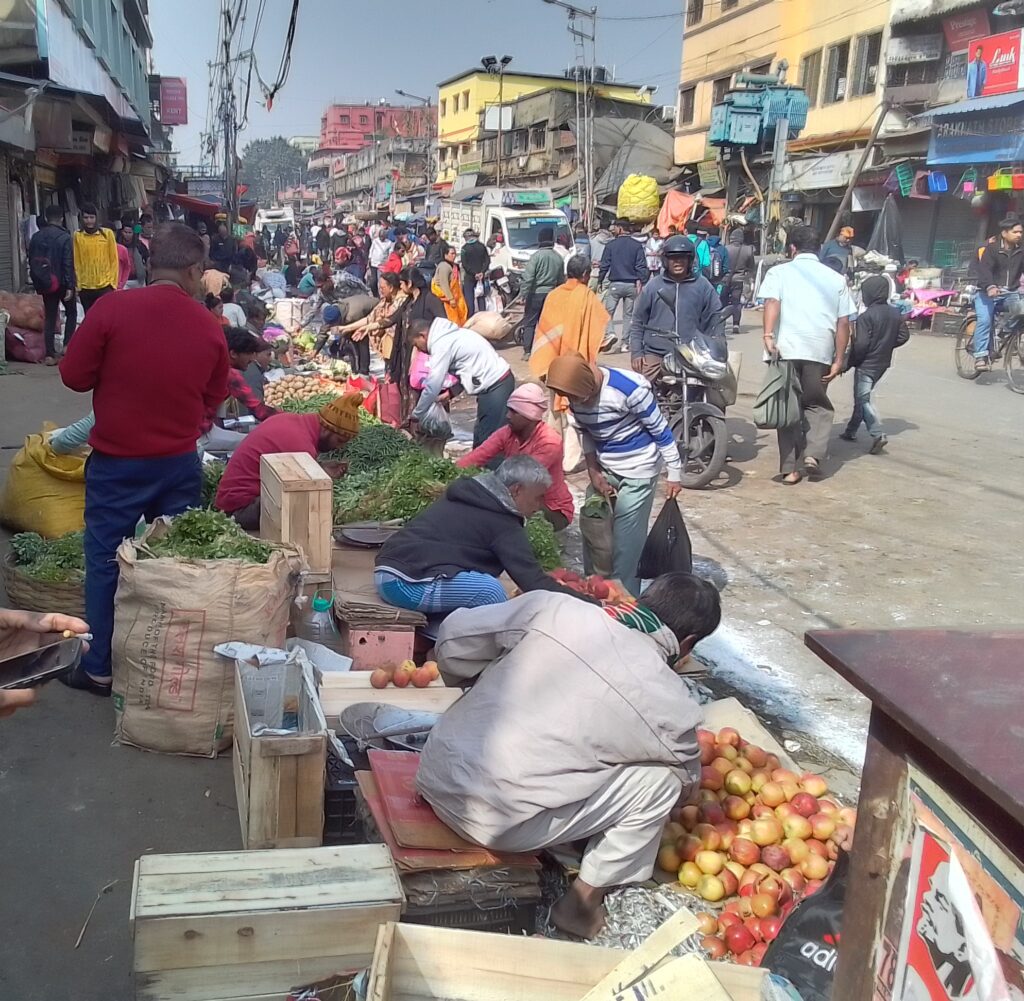
To my amusement, whilst on the river (Hooghly) some locals jumped off and into the river, then swam to shore unscathed. Though I swim reasonably well, I doubt I would have survived the experience without some gastric upset!
Understanding these susceptibilites is another of the keys to homeopathic prescribing.
The recent pandemic demonstrated the principle of Susceptibility perfectly.
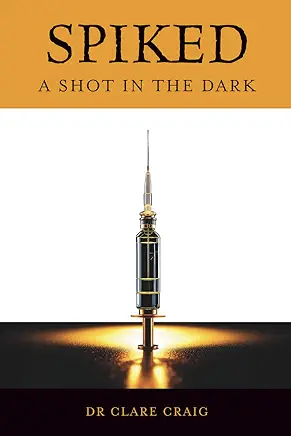
Oxbridge educated consultant pathologist Dr Clare Craig has recently written a book titled ‘Spiked’ (drawing on the ‘spike protein’ nature of the Sars-cov2 virus).
The official line was that covid was a novel virus, to which none had immunity (hence the lockdowns etc.). But as she eloquently argues, this was far from the truth; just one of may points where she courageously challenges ‘officialdom’.
Stop and think. From the earliest days of the pandemic, many more experienced moderate symptoms, than severe. That is not to deny severe cases and those who sadly died. So ‘susceptibility’ was writ large, but ignored. Her carefully researched book (1300 references!) is a worthy read.
Despite, claims of vulnerability, the immune system of the human body is exceptionally adaptable. This adaptability means that our species, homo-sapiens, has managed to populate almost every corner of land in the planet.
Our ability to heal should not then be underestimated.
***
Perhaps you would care to explore whether homeopathy can help with your health? Homeopathy is a gentle healing art with a sound philosophical basis about which you can read more on this website
If so, please book a free 30 minute Discovery Call via this button.
I also give talks. Should you be in an organisation that would be interested a short talk (usually free) – tailored to your needs – please email me at [email protected].


Disclaimer: I am a qualified professional homeopath and not a medical doctor. The NHS has many resources, and seeking the opinion of your GP is always of value.
Dibden Purlieu, Southampton