After sharing impressions of a rather glitzy event in London in my last article, in this blog I wish to return to the basics of using homeopathic remedies at home for common ailments.
This is a subject I come back to from time to time. Back in 2023 I wrote an article titled Family Care with Homeopathy which took inspiration from the work of the late Dr Alastair Jack, one time general practitioner in the Bromsgrove area. He retired in 1980. He made sure that his patients all had a small stock of common homeopathic remedies. This was mutually beneficial as he received fewer out-of hours-calls. Today, this would mean fewer 111 calls or trips to A&E.
In what seems now to be a simpler age, Dr Jack could write an NHS prescription for his patient’s ‘war chest’ but alas that is no longer possible, but homeopathic pharmacies have kits containing most of the remedies Dr Jack recommended. Costing between £30 and £60, they should keep for a decade and more (despite regulation expiry dates) if looked after properly .
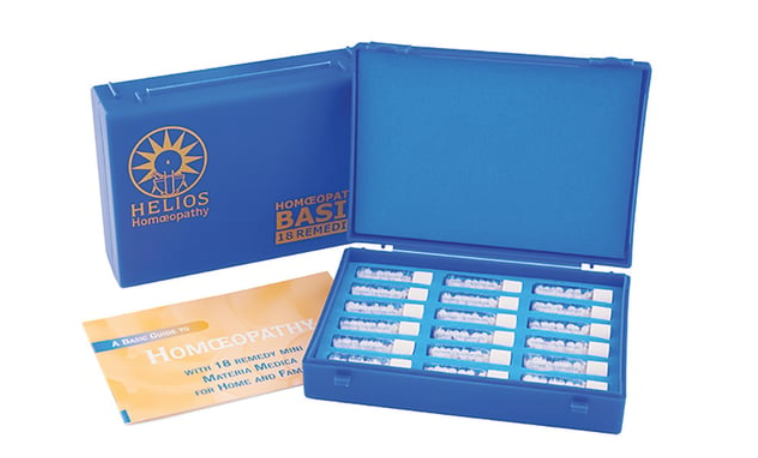
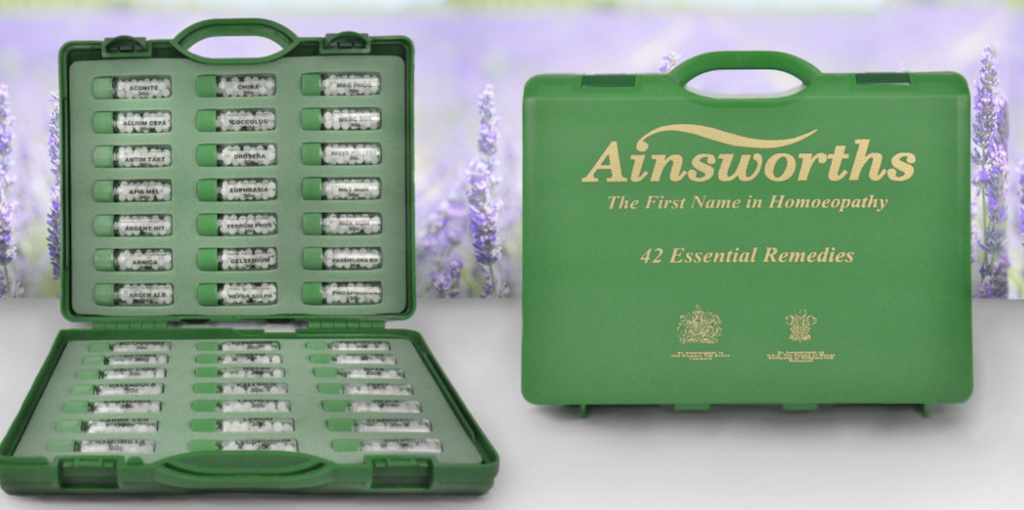
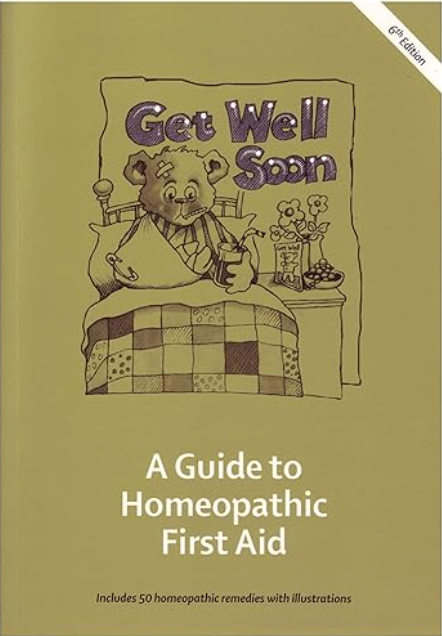
There are also some handy guides costing under £10.
Remedy selection is based on analogy. The word homeopathy means similar suffering. Every homeopathic remedy has a picture – mental/emotional; general, and physical. This picture is matched to that of the remedy – mental/emotional; general, and physical.
How, you might ask can a remedy have a picture? Well, homeopathic remedies are tested on healthy humans (not animals) through which the picture emerges (this is called a ‘proving’). Additionally, for the commonly used remedies, decades of clinical experience enhance our knowledge of these pictures.
Illness is characterised by deviation from the norm. It is fairly obvious that when we get ill or hurt ourselves, our demeanor changes. Maybe we go quiet, or irritable – that’s on the ‘mental/emotional’ plane.
The ‘physical’ is obvious – we have a cough or bruise or rash etc.
‘General’ is a little harder to explain – but it is ‘normal you’ and deviations from ‘normal you’. That could be reation to temperature or food preferences or times of the day.
The best way of thinking about a homepathic remedy is as information. Consider it as an instruction or pattern that generates a response at cellular level.
I have described the manner of manufacture before, but suffice to say that homeopathic remedies are ultra-dilutions. To think in terms of biochemical medicines – be it Aspirin, Paracetamol and more – is a mistake.
Using the analogy of information, quantity (of a single dose) is not very important. Suppose the ‘information’ in one pill is ‘heal my bruise’. Taking 20 pills (at the same time) is the same message as taking one. (So if your child decides to take a bottle full – because he likes the sugar that the pills are made from – or feed it to the goldfish – no harm will result. You cannot overdose, in the manner of taking a bottle of paracetamol – which needless to say would be an emergency).
In short, Homeopathic medicines are very safe.
However, frequency of dose is important. The body may need reminding but you don’t want to nag! So, if you or your child gets a sudden fever, you take the remedy every 5 – 15 minutes according to the severity, and then if there is some improvement go to hourly or three times a day and so on. When you are clearly on the mend – STOP. The body has got the message and will do the rest.
If the condition is less dramatic, coming on slowly – then start with two or three times a day. A cut or bruise or healing a sprain or fracture take time.
In most cases there should be no need for the remedy after 5-7 days maybe two weeks at a push if it is a slow healing issue (for example, fracture after properly set). And if there is no improvement in a few hours, then think about changing to another remedy. As Dr Jack said, you are looking for ‘the key to the lock’. If there is no change after a few doses – retake the case and try another remedy.
Please note, ‘improvement’ does NOT mean 100% better, it could be just a percentage change (less fever, more energy, less pain etc).
Ultimately, the homeopathic remedy is a stimulus to the body to cure itself. The pace of cure is set by the body.
For a baby you can crush a remedy, of better stll place the remedy in a tumbler with a few tablespoons of water and stir for a few seconds, then give a teaspoonful to the baby. The pill does not have to fully dissolve as the remedy which is absorbed onto the pill transfers to the water. You can then cover the tumbler until the next dose. Stir before each subsequent dose.
Following my analogy of information. The dose is the same be it for adult or baby (or elephant and mouse for that matter!).
The first remedies where there is fever are likely to be Aconite or Belladonna; possibly Chamomilla (teething).
Following Dr Jack’s guidance, Aconite is a good opening move. For fever, for croup, for any sudden onset of illness. The child appears frightened or may have suffered a recent shock. A close second is Belladonna. Here there is less fear but burning heat and even delirium or anger / rage. Potentially useful in earache where the above symptoms are apparent.
Note that both Aconite and Belladonna have sudden onset. However, if the onset is slow and the patient listless, consider Gelsemium. For Dr Jack, this was number one for influenza.
Pulsatilla may be considered were there is much catarrh. Where the patient is chesty think of Phosphorus.
Anytime there is sickness and diarrhoea think of Arsenicum album. One remedy to take with you on holiday should you ‘catch’ a tummy bug. The patient is likely to be chilly and restless.
This is also a remedy for respiratory distress (asthmatic) demonstating that homeopathic remedies usually have affinity beyond one bodily system.
Nux Vomica might be considered with overindulgence. And Carbo Vegetabilis where there is bloating and wind, or a state of collapse and need for air (again asthmatic).
Dr Jack suggested Bryonia for headaches and pains that are worse for any movement. In fact, ‘worse for movement’ is a keynote to prescribing this remedy.
For teething babies and toddlers it is Chamomilla that comes to the fore. The child must be carried and jogged will throw away in anger any toy handed to it. It is a temper tantrum remedy.
The classic remedy is Arnica. NOT for cuts but bruising from some blunt force. For bruises, sprains, crushed fingers etc. If there is shock then give a few doses of Aconite first.
For cuts, Calendula and Hypericum have antiseptic and nerve healing properties. They can be taken as remedies but more commonly used as a cream or as tincture (few drops added to water which is then used to bathe the wound).
The above is but an overview and the books mentioned go into more detail. Useful to have, in my opinion, especially when it can be difficult to get help quickly. There is never any harm in giving a remedy whilst you are waiting to get help. Even in ‘nil by mouth’ situations a teaspoon of remedy in water as described (see Babies) barely counts.
The potential of homeopathic medicine extends well beyond first aid. Perhaps you would care to explore whether homeopathy can help with your health? If so, please book a free 30 minute Discovery Call via this button.
I also give talks. Should you be in an organisation that would be interested a short talk (usually free) – tailored to your needs – please email me at [email protected].
Homeopathy is beneficial in treating injury, either by way of first aid or post hospital care. It can and has been usefully used in the hospital and clinic. However, current medical practice is for the most part resistant to old wisdom.
Drawing on Dr Roger Morrison’s Desktop Companion to Physical Pathology, in this blog I will consider bruises and wounds.
The goal of homeopathic treatment is accelerated healing. The management of injuries as followed in general medical practice, and taught by first aid organisations still applies.
Homeopathic remedies are potentised ultra-dilutions. They are not bio-chemical medicines. Rather they act energetically or (I prefer) informationally to stimulate the innate healing potential of the body. By analogy in this information age, a software download. Thus, they are of particular value where the healing process is slower than anticipated. Homeopathic remedies are not generally required for minor incidents.
With a few exceptions the majority of homeopathic remedies used in treating injury (termed vulneraries) are of plant origin. Interestingly, several sit within a single plant family – the Asterales, also known as the Compostitae. That this should be so, surely indicates that Creation is anything but haphazard. Here are the main examples:
As an aside, recall from your childhood the relationship between the nettle (Urtica urens) and the common dock (Rumex). You ease the sting of the nettle by rubbing with the dock leaf. In this case different plant families, yet often found growing together. (Homeopathically both remedies have itching of the skin as a keynote; a small example of the like cures like homeopathic principle).
Let’s consider some plants in homeopathic practice that are beneficial in treating injury:

Even those unfamiliar with homeopathy, have likely heard of arnica. Commonly, used as a cream or ointment containing tincture of the plant and used for strains, contusions and muscle soreness.
A tincture is usually an extraction of the plant (or part of) preserved in an alcohol water mixture. Tincture in 10% alcohol is a typical starting point in the homeopathic process of making a potentised remedy.
Do not use Arnica tincture or herbal cream on an open wound as will cause irritation.
The guide word for arnica is BLUNT trauma. Minor bruises do not need homeopathic treatment though topical use of a salve will do no harm.
Homeopathic arnica comes into its own after severe trauma leading to deep bruising. The sort of trauma following a fall, car crash or surgery. In such cases it is the No.1 remedy. In the event that shock is predominant then first give Aconite (see later).
Interestingly Arnica also has an affinity to past trauma. I recall a case taken by the remarkable Prof. George Vithoulkas (still working and in his 90s) when attending a course at his academy in Greece. The patient had been badly assaulted years ago. She had not been well since. Vithoulkas opened the case with homeopathic Arnica!
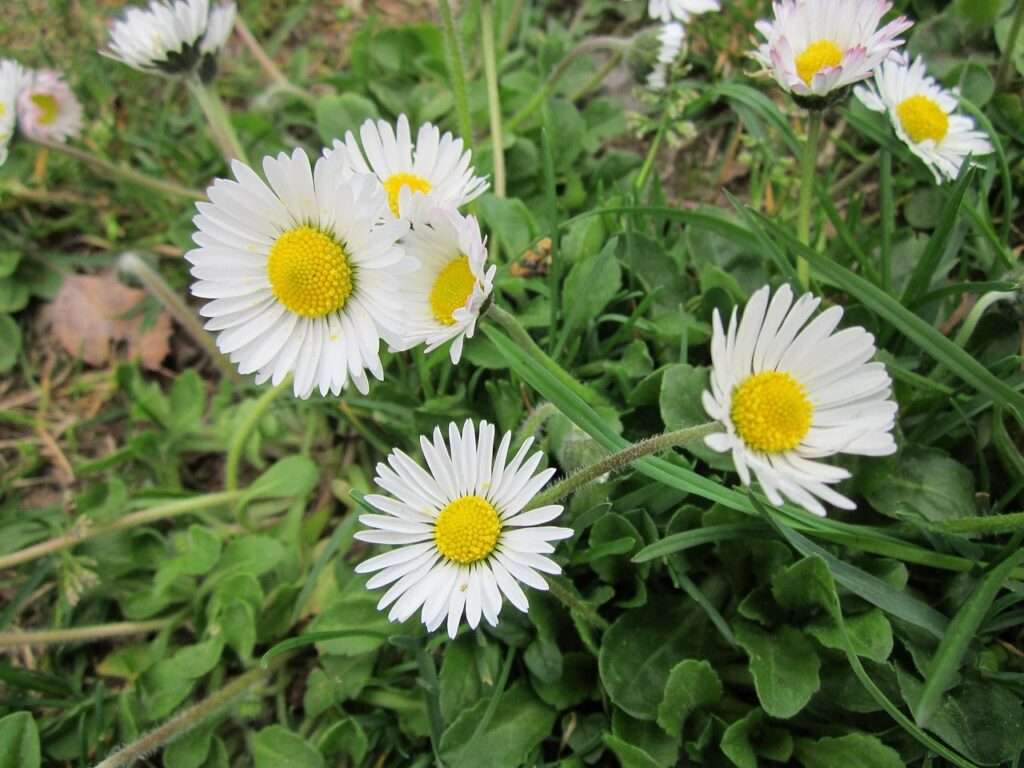
This is the common daisy. Similar to Arnica, but it has particular affinity in cases of surgery to soft organs and blunt trauma to the abdomen or pelvis (including the womb – say, in pregnancy).
It is also a remedy where there has been injury to the nerves.
Apparently, the late Dr James Compton-Burnett, spoke of it being a ‘princely remedy for old gardeners’. In other words of benefit to those overusing their muscles a great deal. Perhaps less of a hazard in this machine age. In my text book I find this remedy also as the No.1 for twisted ankles.

The marigold. ‘The’ remedy to prevent infection and promote healing in clean cut wounds. Also valuable in slow healing ulcers and simple (first degree) burns.
It can be used externally (topically) as tincture or salve and/or internally in homeopathic potency.
Various creams are available over the counter. However, a few drops of mother tincture in boiled and cooled (i.e. sterile) water dabbed onto the wound is equally effective.
An eyewash prepared in a similar way, can ease abrasion of the eye. Ditto a mouthwash after dental procedures (it has haemostatic – stops bleeding – qualities).
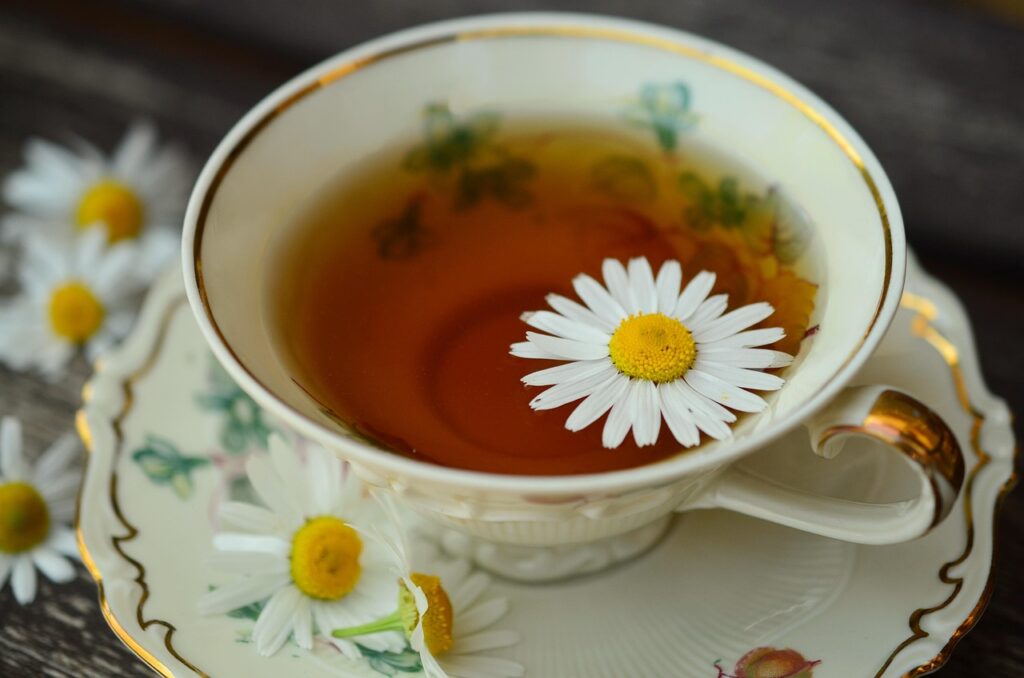
Camomile – more familiar as an infusion, perhaps. Another daisy. In this case to calm pain.
Dr Margaret Tyler was another famous homeopath from the past suggested and alternative name, “cannot bear it”. Chamomilla is a remedy for pain. The general keynote is sensitivity beyond that which might be expected. Hahnemann apparently said not to give chamomilla where sickness is borne with calmness and patience. It gains its place in settling teething children who are unconsolable. Given a toy they throw it away. Only when the child is carried around is there relative ease.
Similarly the adult in pain must pace the floor, so one might think of its use in certain type of toothache.
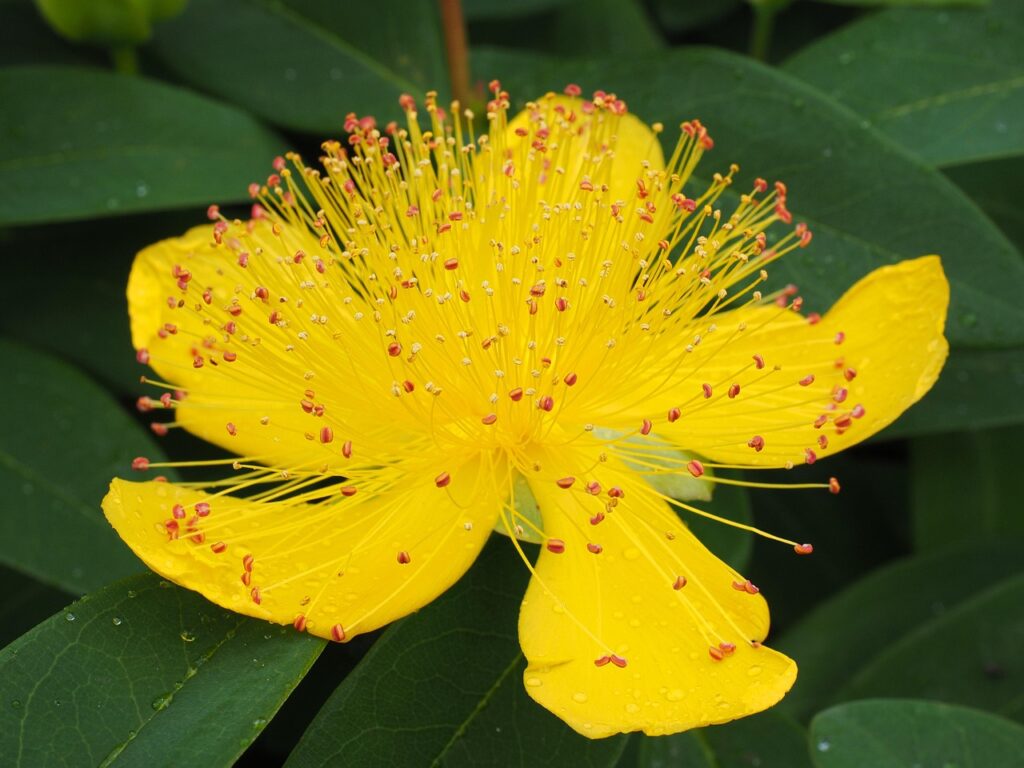
We move to a different plant family. If you are a gardener, you will be familiar with Hypericum or St. John’s Wort.
This remedy is for wounds to areas dense in nerves. Think of crushing wounds such as fingers caught in a closing door.
Mentioned also is pain lingering after an epidural or episiotomy or even an amputation.
Sometimes known as Marsh Rosemary and in the Rhododendron family.
In common with hypericum, this remedy is for puncture wounds. No.1 for the effects of bites or stings (insect or animal) or stepping on nails, staple guns or such like.
Can be useful in Plantar Fasciitis (heel and arch pain in the sole of the foot)
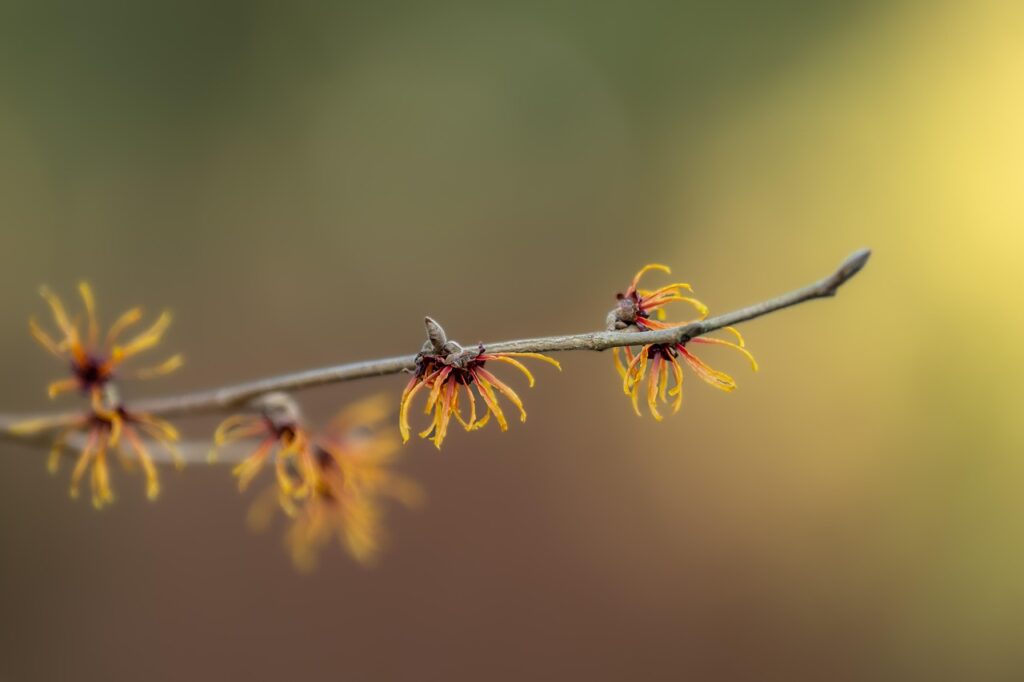
Better known as Witch Hazel. What arnica is to soft tissue, hamamelis is to oozing congestive haemorrhages such as inflamed veins and surrounding tissues. Varicose veins come into this category and haemorrhoids (piles) which are simply varicose veins of the rectum.
A specific remedy for bleeding inside the eye after trauma.
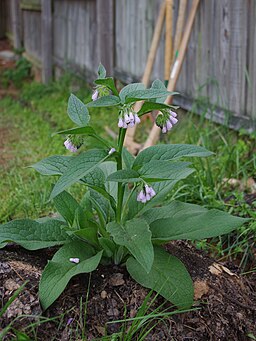
This plant better known to gardeners as Comfrey is also worth a mention. Its specific ‘talent’ is in the healing of fractures (after properly set in place by the orthopaedic department).
To quote “In the case of a fracture a surgeon’s aid is indispensable. At all events, a few doses of Arnica should be administered as it does good in many ways. After the bone has been set …symphytum should be administered internally for a … week or more”. The late Dr Bhanja of Calcutta (The Homeopathic Prescriber).
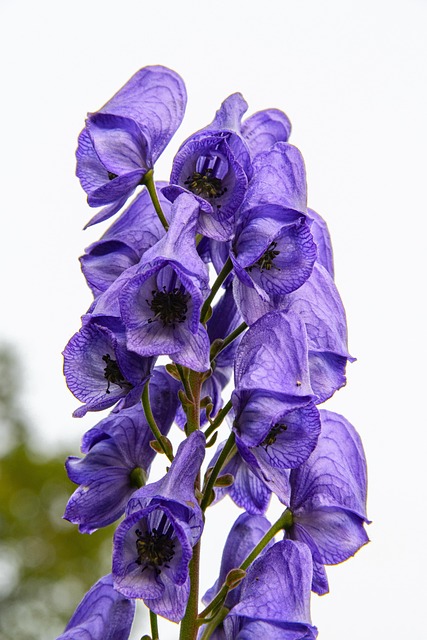
Finally, I wish to mention Aconite Not in the specific context of physical trauma, but SHOCK following trauma. The mental keynote for Aconite is “anguish of mind and body; the restlessness; the disquiet not to be allayed.” Ailments caused by fear and fright; fear of death.
Give Aconite first if there is shock. Arnica can follow.
Standard advice is to give nothing by mouth whilst awaiting the paramedics etc. Homeopathic remedies can still be given in this spirit. If you have a homeopathic first aid kit, one pill can be put in a little water and a teaspoon given. Or just moisten the lips. And if there’s no water to hand, a tiny pill popped into the mouth still presents no hazard.
***
Should you need advice on recovery from some trauma, be it physical or emotional please get in touch. I offer a free half-hour discovery call which you can book via my website. Or send an email to [email protected]
Can Homeopathy help with the stress and anxiety of big events like examinations? Well, yes it can.
As we reach the summer solstice, I now realise that I should have written this blog a little earlier (sorry!) as the exam season is almost over. It will come around again.
In any case stressful events are always with us, so the topic of this blog extends well beyond the classroom.
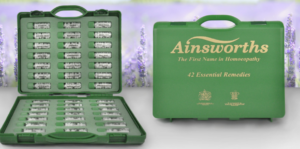
Continuing with the series on homeopathic remedies in a typical home first aid kit, in this blog I focus on kit remedies that have a particular affinity to exam stress.
For more on the benefits of purchasing a first aid kit of basic homeopathic remedies see my earlier blog Family Care with Homeopathy
Exam time is often marked with anxiety that can impact on performance. Anticipatory fears can cause both emotional and physical symptoms. Homeopathy offers remedies for stress and anxiety that are tailored to the needs (emotional and physical) of the student.
Classical homeopathic prescribing considers the following:
Consider homeopathic treatment like finding the right key for a lock, if after a taking the remedy for a short while (say one pill morning and night for 1-4 days) there is no response, then try another.
Remember that homeopathic medicines are absorbed through the mucous membranes of the mouth – not the gut – so you let the tablet or pill dissolve under the tongue.
A useful tactic on the day of the exam is to dissolve one pill in a water bottle (shake well) and sip during the course of the exam day.
The Aconite picture is always one of sudden onset. Consequently, Aconite is useful when the student has a panic attack that comes out of the blue, helping to stabilise the emotional upheaval quickly.
The keywords for Arg. Nit. are anticipation and uncertainty. Well, what else at exam time! It helps those who feel hurried and fearful of failure despite being well-prepared.
The Arsenicum picture is one of anxiety with restlessness and a compulsive concern for order. The student cannot settle and needs to check and recheck they have all the bits and bobs they need on the day.
It is by the way, the No1 remedy for sickness and diarrhoea after eating something that disagreed – so one to have with you on holiday.
Gelsemium is better known as an influenza remedy. The sufferer is weak, shaky and apathetic. A sort of paralysis results – a type of fear, that is characterised by ‘why bother’. There can also be diarrhoea from emotional excitement. It is a remedy for courage.
Here the keynote is lack of self-confidence and apprehension, although the student may outwardly show bravado. This student may over-prepare because they’re worried about their performance. Lycopodium is well known generally for gastric symptoms, especially bloating.
Although a homeopathic remedy in its own right, this is better known as a Schleussler tissue salt. It is a nerve nutrient, beneficial for students who are exhausted mentally from overstudying. It helps relieve feelings of stress and helps in restoring the brain’s energy levels.
While homeopathy is helpful in addressing exam stress and anxiety, don’t forget the basics. Maintaining a balanced lifestyle is key.
Fatigue exacerbates anxiety; 7-9 hours of quality sleep each night is crucial. Avoid late-night cram sessions and setting a consistent sleep schedule supports the body’s ability to manage stress.
Fuel the body and mind with ‘clean’ food. Eat nutrient-dense whole foods like vegetables, fruits, lean proteins, nuts and seeds. Staying hydrated and limit stimulants like caffeine. This also helps regulate anxiety levels.
Constant studying leads to burnout. Take short 10-15 minute breaks every 90 minutes to recharge. Get some fresh air, meditate, or go for a walk to clear the mind before diving back in.
I recently listened to a Medical Doctor who suggested this:
Put your right hand between the thumb and forefinger of your left hand. Then gently place your right thumb in the middle of your left palm, and your middle finger on the outside of the left hand. Now join the tips of your left thumb and left middle finger together.
Why not give it a try!
We have looked at some homeopathic remedies that can help with the sort of short term anxiety that it typical of exam time.
Howevere, Homeopathy also plays a crucial role in the treatment of deeper seated anxiety states. Here constitutional treatment, involving a deeper assessment of the individual’s overall health, temperament and symptoms. Whilst anti-depressant medications has its place, the homeopathic approach (which takes time – there is no magic bullet) should yield long term benefits and restore harmony.
If you have a deeper seated anxiety problem and wish to explore the homeopathic approach, please book a Free Discovery Call via my website.


Disclaimer: I am a qualified professional homeopath and not a medical doctor. The NHS has many resources, and seeking the opinion of your GP is always of value.
Dibden Purlieu, Southampton