A few weeks ago I penned a short article titled What is the Nature of a Child. In this part 2 I expand on what I wrote previously.

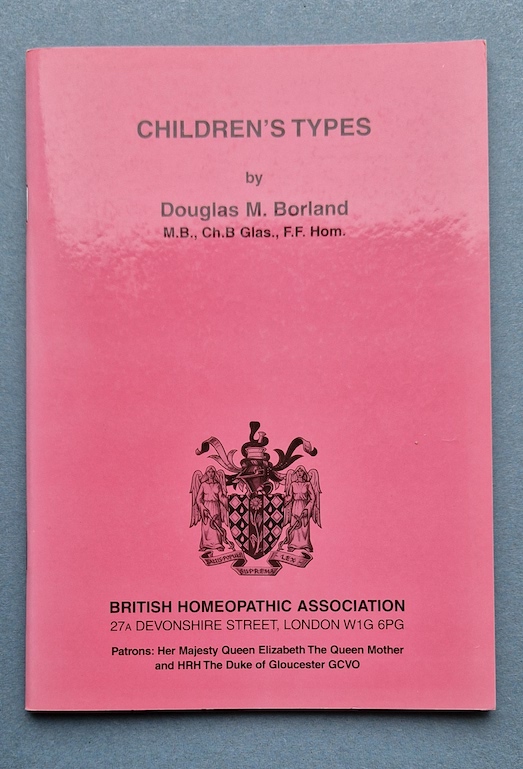
To briefly recap, my main reference is two small booklets on children’s types. Neither are in still in print which is a pity as they share great wisdom. One was written by a Dr Borland (1885-1960) who was clearly a remarkable physician. In Children’s Types he groups common homeopathic remedies into five groups. These (in the language of his time) are:
The second written by retired GP Dr Anne Wynne-Simmons is shorter and considers just six remedies that characterise six common children’s types.
It is important to note that constitutions are more variable than the term ‘type’ suggests. Perhaps ‘state’ is a better word choice. The word ‘type’ suggests permanence whereas ‘state’ is something more fluid. States change according to life circumstances, something that is all too apparent when we see the impact of famine or war on populations on the television.
Nonetheless, we humans share certain archetypical characteristics of our ancestors. The ancient cultures such as the Greeks and Romans observed this. So it is nothing new.
In this group we looked last time at Calcarea Carbonica or calcium carbonate (limestone).
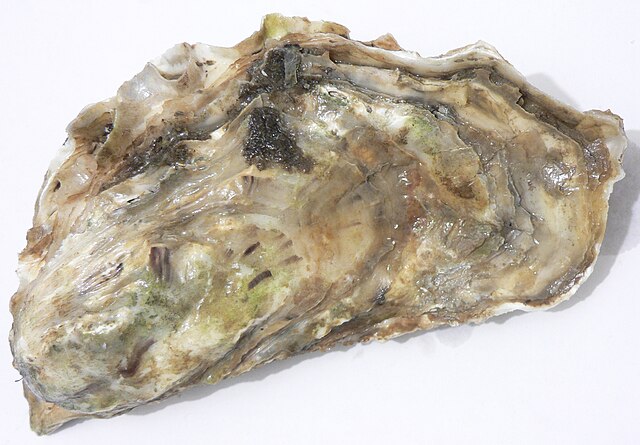
Specifically this remedy is made from the inner layer of the shell of an oyster. Many young children or babies can go through a Calc.carb phase, with the common characteristics of chubbiness and a certain lethargy.
In my earlier blog, I omitted to mention a couple of points. Physiologically, calcium is an essential element in the body, and vital in the mineralisation of the bones. Thus, one physical aspect of the Calc.carb constitution is slower than normal skeletal development.
On the mental / emotional front Calc salts are very sensitive to criticism and worry about what others think about them.
By analogy, ‘oysters’ don’t tend to move about much and they hide within their shell (protected from the world). This is home and the archetypal Calc.carb is a good homemaker.
Note the combination of both calcium and carbon. Calcium makes up about 2% of body mass (mostly in the bones) and Carbon 18%. Jan Scholten, is a doctor, homeopath and modern author / researcher who perceives self-worth as a main mental / emotional theme of carbon. It will be a common theme in this article.
Another Group 1 remedy mentioned by Borland is Calcarea phosphorica or calcium phosphate. Physically this is a rather leaner picture. The Calc.carb child may segway into a Calc phos. state as they grow.
Borland notes a tendency to growing pains of a muscular nature, and a tendency to headaches if overworked at school. Calcium phosphate is important in the mineralisation of the outer matrix of bones and tooth enamel.
To quote Havant based Dr Jonathan Hardy, this remedy comes into usefulness “at any time in life when nutrition and growth are especially important”. I recall one remarkable case on video (Dr Banerjea) of the transformation a young child with some form of mysterious muscular wasting disease after this remedy was given.
Phosphorus for Jan Sholten suggests a sympathetic and outgoing nature. Friends are made easily. Though more outgoing than the Calc.carb. child, the sensitivity to criticism and fearful ness is still there (calcium). This fear of criticism can lead to overwork at school (a compensation). Headaches may result – even burn-out.
Calcium and phosphorus are somewhat a combination of opposites. Calcium more grounded than the effervescent nature of phosphorus (think of the phosphorus content of matches or fizzy drinks).
The combination of two elements is always more than the sum of the parts.
In my earlier blog I selected Natrum muriaticum (Nat.mur for short) which is a homeopathic preparation of common salt (sodium chloride). Nat.mur is the responsible yet emotionally closed child. Dr Wynne-Simmons thought a ‘state’ the befalls the eldest sibling in the family.
This time I consider Baryta Carbonica (Baryta carb.) which is barium carbonate. Another carbon.
Dr Borland uses the term ‘dwarfish’. He claims that he never saw a Baryta carb child who was up to standard height (though they may be standard weight).
In general everything is late (speaking, walking, dentition and so on). Excessive shyness is a keynote. These children are forgetful also and lack concentration. There can be a tendency to tonsillitis. Their energy is low.
Jumping forward in time, Jan Scholten suggest that the Baryta type is a more extreme Calcarea. He writes “Whilst Calcarea is afraid of what others will think about them, Baryta is convinced that others think them to be worth nothing”. So they hide themselves away. They are prone to influence. They may act silly. Their fears and anxiety means that they only feel secure around their mother and in the home.
Last time I looked at Graphites and graphite is pure carbon. Dr Borland writes of uncertainty, hesitation, and hopelessness (back to self-worth again). The Graphites child dreads going to a new school. ‘They are always looking for trouble’, he says.
The ‘carbon’ perception of self-worth is either solved by acceptance and just getting on with things (hence a dullness in outlook). But if there is no resolution, there is instability, leading to easy upset.
The Graphites skin tends to crack on exposure to cold. Graphites may be the archetype but all the ‘carbons’ can have skin issues.
Now, I’d like to introduce the remedy Petroleum (aka crude oil which is a hydrocarbon – carbon again).
Dr Borland perceived Petroleum children as thin and hungry, and often hungry between meals. These children are sensitive to noise and cold. Skin eruptions are common at the back of the ears, with cracks, oozing and bleeding. The fluid which oozes forms a crust. The itch is worse during the day. In cold weather the skin of the hands tends to crack, especially at the finger tips. Itchy eyes, blepharitis or conjunctivitis are common.
Sea or travel sickness is common with a characteristic headache starting at the back of the head.
A strange mental symptom – more applicable to adults – is disorientation in familiar places.
Homeopath Jeremy Sherr creates a nice mind-picture for Petroleum. He observes that petroleum derivatives (petrol, diesel) allow us to travel. Yet the petroleum ‘type’ suffers travel sickness and disorientation. We can travel but we no longer know where we are! Petroleum is a metaphor for our age.
Which is why emigrés make communities with fellow travellers.
To travel is perhaps a search for self worth, or to fulfil a need to work (‘carbons’ find meaning in work)

Last time I introduced Sulphur and Pulsatilla. Sulphur being ‘the ‘ archetype of the warm blooded type.
Next I introduce Iodum (Iodine), one of the halogens in the period table of elements. Iodine is an important element for the regulation of the thyroid gland.
Dr Borland says that Iodum children are thin and constantly on the move – two keynote features. Despite their hunger they lose rather than gain weight. Always busy, they are aggravated by heat of any kind.
He teaches us that these children are irritable . Without reason they break out into violence and hitting their brother or sister. Then they become depressed and lose interest in things.
Scholten tells us that they just cannot keep up with all that is going on in their mind. So they forget things. This in turn can lead to a certain obsessiveness.
Catarrhal, asthmatic and abdominal complaints are typical.
Arsenicum and Chamomilla were the ‘types’ of interest in the previous blog. Both highly strung types, Arsenicum in a more general way, and Chamomilla most notably in its disproportionate response to pain (a tantrum remedy).
I shall close this article with another ‘carbon’ in this group, namely Magnesium Carbonicum (Mag.carb).
We now know something of the Carbonicum state, namely the shyness, the importance of self-worth and by extension the dedication to work (which provides meaning).
Here, Borland speaks of a lack of stamina and poor muscular power. Sleeplessness is a problem. Often they cannot get to sleep at all!
Mag.carbs have a complete aversion to vegetables. However, they like fruit and have a marked craving for meat, he says. They are also very sensitive to touch.
Borland does not mention aggressiveness, but Scholten does. These are perpetually awkward children. From Scholten we learn that this had been the remedy of choice (J.T. Kent) for rebellious children in orphanages back in the 19th century.
It is one of two magnesium remedies to consider for children of divorced parents (the other being its ‘cousin’ magnesium muriaticum). The Mag.carb child’s anxiety stems from a feeling that that the parents are quarrelling because of them. Despite their own temper, these children are peacemakers at heart. Because of the trouble they cause they fear that that Mum and Dad may leave.
***
I hope this and the earlier article give you some insight into the relevance of homeopathy for children, whether their issues are emotional, behavioural or physical – or more likely some combination.
Should you care to explore the power of homeopathy please book a free 30 minute Discovery Call via this button.
And if you are in an organisation that would be interested a short talk (usually free) – tailored to your needs – please email me ([email protected])


Disclaimer: I am a qualified professional homeopath and not a medical doctor. The NHS has many resources, and seeking the opinion of your GP is always of value.
Dibden Purlieu, Southampton