
What is the nature of a child? An interesting question, as no two children are the same, as any parent or school teacher will tell you. It is a subject that has long been of interest in homeopathy, and one that can aid prescribing.
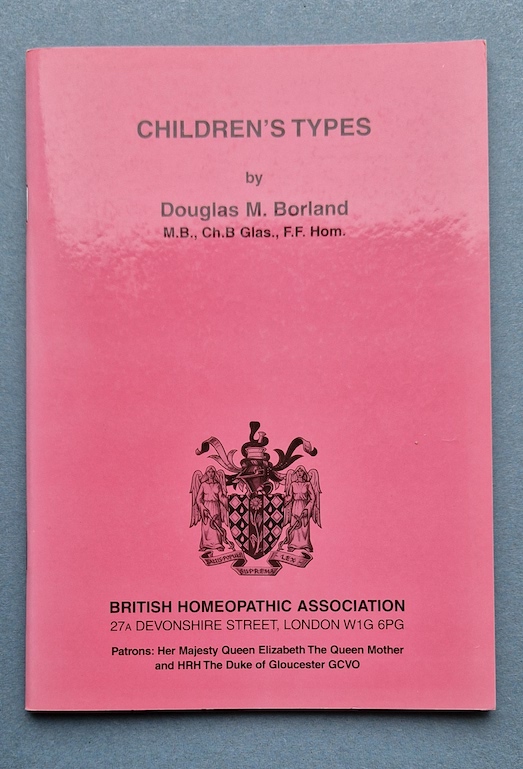
On my bookshelves I have two small booklets on children’s types which I will use as a guide to this short introductory article. Neither are in still in print which is a pity as they share great wisdom. One was written by a Dr Borland (1885-1960) who was clearly a remarkable physician. Titled Children’s Types he groups common homeopathic remedies into five groups. These (in the language of his time) are:
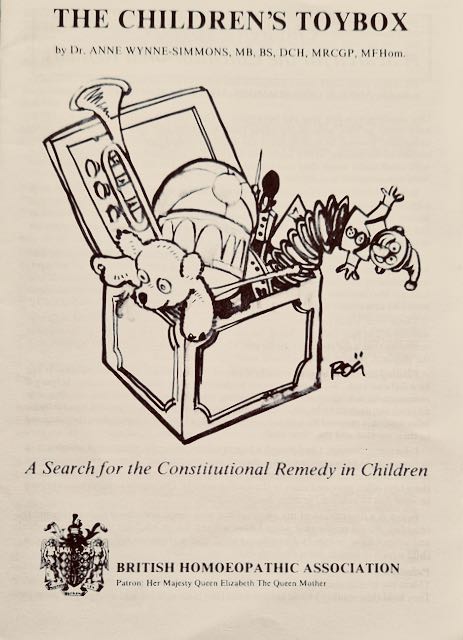
The second written by retired GP Dr Anne Wynne-Simmons is shorter and considers six remedies that characterise six common children’s types.
Homeopaths talk about the ‘Constitutional’ Remedy which is where is an affinity between the nature of the person and a particular remedy. I have written before about how each homeopathic remedy or medicine has a picture. This picture comprises the mental emotional sphere as well as affinities to general or physical states. Constitutional prescribing is about matching remedy ‘pictures’ to the ‘picture’ of the patient. Classical Homeopathy is – in general – about observation and pattern recognition. Hence the natural Law of Similars (Homeo = similar; pathy = suffering).
A pure match with any single remedy is rare if not impossible. In truth we are all mongrels and our ‘picture’ changes over time dependent on what comes our way in life. But there may be a dominant theme.
With children you see what you get. Life’s journey has just begun. In contrast, adults are less open. In order to get on in society, adults learn to conceal their natures to some degree. We control our tempers and tears, for example. The young child does not.
Dr Wynne-Simmons relates the story of two five-year-olds in the same class at school with eczema. From a conventional medical perspective both, having the same problem, would receive the same treatment – let’s say a steroid cream.
The homeopathic perspective is different because the nature of the two boys was quite different. One was shy and anxious about starting school; the other quite boisterous, who settled into his new environment with enthusiasm. Although each child had the same physical symptoms, each case was opened with a different homeopathic remedy. This reflects the holistic approach in homeopathic practice, which means looking at the totality of the symptom picture (not just the troubling symptom). In short we are all unique.
The upside to this is that the healing is deeper. The downside is it can take a bit of trial-and-error to find the remedy or remedies that work. As ever practice makes perfect, and the skill of these doctors was built on years of observation.
In what follows I will pick the headline remedy from each of Dr Borland’s groups (plus a couple).
Remember that homeopathic medicines are made by specialist pharmacies. The are potentised ultra-dilutions. You can find more on this in an earlier post. If you are new to homeopathy, please understand remedies such as Arsenicum album do not contain material doses of arsenic!
This is calcium carbonate, its origin comes from the inner surface of the oyster shell. Calc.carb for short.
Many children will go through a Calc.carb phase. Borland writes that these children are tend to be “over-fat, chilly, lethargic” – bring to mind the easy going placid chubby baby. As toddlers they happily await the world to come to them rather than be explorers. They are not energetic nor sporty and may be a bit slow at school – though thorough in their task. Like the oyster (should you try to prise one from the sea bed) there is an obstinate streak. Generally speaking, they are content and undemanding children. They love eggs but can be constipated. The back of the head can be sweaty – noticeable from the wet pillow at night.
This is sodium chloride, better known as common salt. Nat.mur for short.
Dr Wynne-Simmons is of the opinion that children are not born to this constitutional type but develop a Nat.mur. protective layer in response to their environment. Perhaps, where a parent is overburdened and the child feels they are not getting the attention they wish. Thus the Nat.mur child may be the older child of the family.
This type is very responsible and quite emotionally closed (keep things to themselves). “They have a dislike of being handled”, says, Dr Borland, and what first appears as shyness is actually anger. “Soothing the child may make matters worse – it is best to be firm”. This child may have a strong sense of justice and Dr Wynne-Simmons writes that the “it’s not fair” phase (common in children) may be more pronounced. This sense of justice may make it difficult to make friends at school as they may be little ridgid and less able to give and take. Later on at school the Nat.mur child may be prone to headaches (frontal) brought on by concentrating too much – working too hard.
This is pure carbon, a key component in the human body (19% by weight) and fundamental to life.
This remedy heads Dr Borland’s skins group, though – as he points out – eczema can respond to remedies from other groups (e.g. Calc.carb, Sulphur etc.). You will note that Calcarea carbonica also has a carbon element, and therefore it comes as no surprise that this child may also be on the heavy side, chilly and often constipated.
Borland says (perhaps uncharitably) that Graphites children can be a bit miserable, always looking on the hopeless side of things. They show a lack of assurance. At school they hesitate in replying to a question, and have an aversion to work. They blush easily. However, this constitutional type is often very caring especially to members of their own family.
A notable difference between this type and the Calc.carb is the skin. In the latter it is soft and sweaty whereas the Graphites child has harsh dry skin which tends to crack. Cold weather and playing in water leads to chapped hands and bleeding.
Homeopaths learn that the eruptions requiring Graphites ooze a sticky honey like discharge, the problem areas often being where the skin folds (back of the ear, around the wrists and so on). There can be similar nasal discharges, and eye lids that stick together in the morning.
Though hungry children, they do not like eating fish. Borland also mentions that acute acne with (surprisingly) an aversion to sweets in adolescence can be a pointer to this remedy.
This is indeed sulphur, the yellow mineral with which we are all familiar.
Sulphur is perhaps ‘the’ archetypal remedy in homeopathy. It’s picture is so broad that the tendency is to dismiss it from consideration.
If you think of a volcano and the sulphurous fumes during a fiery eruption, you come quickly to the picture of heat, hence Dr Borlands classification of “warm blooded”. Calc.carb children tend to be chilly, but Sulphur children are quite the opposite. They cast clothes off if overly wrapped up.
These are not tidy children – if there is a toy box present, it will soon be emptied all over the floor as Dr Wynne-Simmons observes. And he or she will be into everything given half a chance.
Like the explosive nature of the volcano, they are apt to lose their temper but it tends to subside. These children like rough and tumble, are intelligent and enthusiastic about their interests. They may appear lazy, but Dr Borland notes that this could be lack of stamina, as the Sulphur type tires easily.
This a flower, also known as pasque or wind flower. I include this second remedy from Group 4 as alongside Calc.carb it is a classic children’s remedy. The flower likes chalky soils and chalk is calcium carbonate!
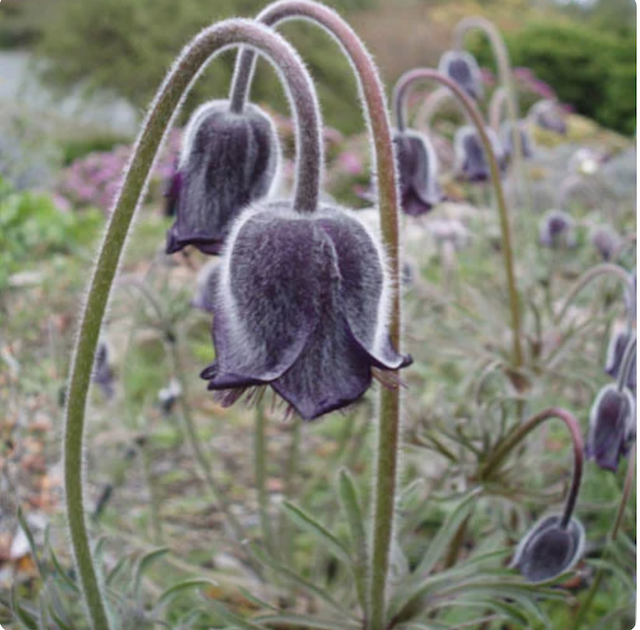
It has large flower heads that sway in the wind. Whilst exceptions prove the rule, it is classically associated with the temperament of a girl. The pulsatilla child is affectionate and tearful (alternating with laughter) who wants to please. Typically small children with fine skin and hair, they are quite shy and will hold her parents hand. They like attention and don’t like being ignored. Rich foods (fat) tend to disagree.
Whist the above is the stereotypical picture Dr Borland records a second Pulsatilla type. This child is slightly fatter, less fair, and more inclined to be tearful and irritable, a type easily overlooked when one has the more common picture in mind.
As is expected for this Group, the common theme is the reaction to heat as both types flag in hot weather. A sudden chilling during hot weather can lead to digestive upsets.
Pulsatilla children have a tendency to catarrhal states such as earaches often brought on by exposure to cold. Eye troubles such as conjuctivitis and styes can also trouble.
The origin of this remedy is indeed arsenic (arsenic trioxide to be precise) and Ars.alb for short. Agatha Christie’s favourite poison! But homeopathy turns swords into ploughshares.
Dr Borland’s Group 5 are ‘nervy’.
Dr Wynne-Simmons observes that these children have a fine build and are neatly dressed. They tend to play quietly and constructively. They don’t like a mess or make a lot of noise. Indeed noise distracts them. Arsenicums like their bedrooms tidy. Very different from the Sulphur type for example. These children can set high standards for themselves and may be good organisers.
Dr Borland, writes that the Ars.alb child is highly strung, finely made and possibly the most attractive of children. But they are easily scared and can suffer from night terrors. There is a restlessness and they never spend time doing nothing. As a consequence, they tire easily. He says ‘inordinately’ tidy – even small boys. These children are upset if they spill jam over themselves and get into a mess; the distress is disproportionate to the cause.
Exposure to cold, makes Arsenicums liable to catch ‘cold’; a watery discharge from the nose that burns the lip the result. These children can be asthmatic, which given their nervy nature, if very frightening. They are also prone to digestive upsets and diarrhoea after eating fruits or ice cream (Ars.alb is the No1 for diarrhoea and vomiting due to food poisoning when on holiday – adults included).
Chamomilla sits in the same group, and I mention it also – but only briefly. Its origin is the plant commonly known as German Chamomile (as used in Chamomile tea).
The keynote here is extreme sensitivity to pain, and a consequential “frenzy of rage” (to quote Borland). This child will strike out. It is, he says, almost universal for the furious teething child with tender swollen gums, that are one sided as shown by redness on that cheek. You can soothe a Chamomilla baby by jogging him/her in your arms – but you’ll frighten an Arsenicum!
Of course the above is just an introduction.
***
Should you care to explore the power of homeopathy please book a free 30 minute Discovery Call via this button.
And if you are in an organisation that would be interested a short talk (usually free) – tailored to your needs – please email me.


Disclaimer: I am a qualified professional homeopath and not a medical doctor. The NHS has many resources, and seeking the opinion of your GP is always of value.
Dibden Purlieu, Southampton